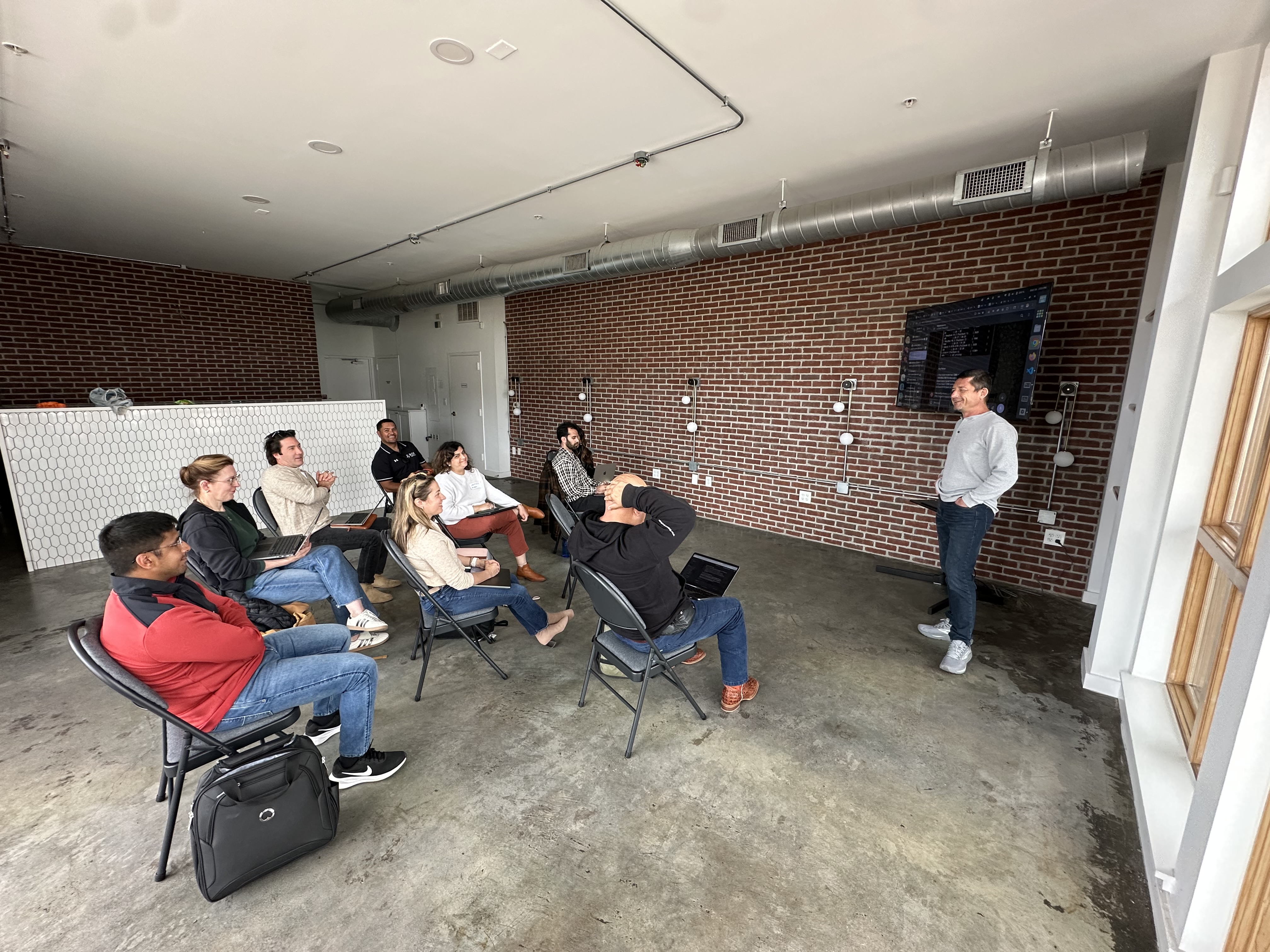
During SXSW 2026, we gathered a room of founders and builders at the Pirin.ai Founder Builder Studio on East 6th Street for a session on one of the most important shifts happening in AI right now: the move from caged, question-and-answer chatbots all the way to fully agentic environments where AI systems can act, build, and operate on your behalf.
The conversation was freewheeling, hands-on, and full of ideas. Here is how it unfolded.
Act I: The Evolution from Caged Models to Vibe Coding to Unhinged Agents
We opened by tracing the arc of how most people encounter AI today and where it is rapidly heading:
- Stage 1 — Caged Q&A chat. ChatGPT and its kin. You ask, the model answers. Useful, but confined. The model cannot touch your systems, your files, or your world.
- Stage 2 — Vibe coding tools. v0, Cursor, Replit Agent. The model can now generate and iterate on code with you in the loop. You describe, it builds, you review. Huge step forward.
- Stage 3 — Totally unhinged agentic environments. Tools like OpenClaw and the class of open-source agentic frameworks it represents. The agent does not wait for prompts. It plans, executes multi-step tasks, manages state across sessions, and operates autonomously inside your systems.
"The leap from vibe coding to agentic AI is not incremental. It is a different mental model entirely. You are not editing a document with AI. You are directing a team."
Understanding this progression is essential for founders deciding where to invest their time. The tools at Stage 3 are available today. The question is whether you have the mental model to direct them effectively.
Act II: Open Weights vs. Proprietary Cloud Models
A significant part of the discussion focused on a decision every builder working with agents faces early: which model do you run your agents on?
- Proprietary cloud models (OpenAI GPT-4o, Anthropic Claude, Google Gemini) — the highest capability ceiling today, with simple API access. You pay per token, data leaves your infrastructure, and you are dependent on provider pricing and availability.
- Open weights local models (Llama 3, Mistral, Qwen, Phi-4) — run on your own hardware or a private cloud. Full data control, no per-token costs at scale, and increasingly competitive performance for specialized tasks. The tradeoff is infrastructure overhead and a steeper setup curve.
For most founders building their first agent-powered product, we recommended starting with cloud APIs to validate the use case, then evaluating open weights for cost and privacy reasons once the product is working. The tooling for local model deployment (Ollama, LM Studio, llama.cpp) has matured dramatically in 2025—it is no longer a research-only path.
Act III: Building and Operating Agents on the Move via Telegram
One of the most practical segments of the session covered something that surprises many people: you do not need a laptop to run and interact with an AI agent team. Messaging channels—especially Telegram—have become a serious operational interface for agentic AI.
We walked through how OpenClaw and similar frameworks can be connected to a Telegram bot, turning your phone into a command interface for your agent team. Use cases we discussed:
- Sending a voice note to your ops agent and having it update your task list.
- Getting a daily briefing from your research agent delivered to your Telegram.
- Triggering a customer follow-up workflow with a single message from anywhere.
- Monitoring agent activity and getting alerts when something needs your attention.
The mobile messaging interface pattern is underrated. It removes friction, works on any device, and keeps founders engaged with their agent teams without being chained to a desktop.
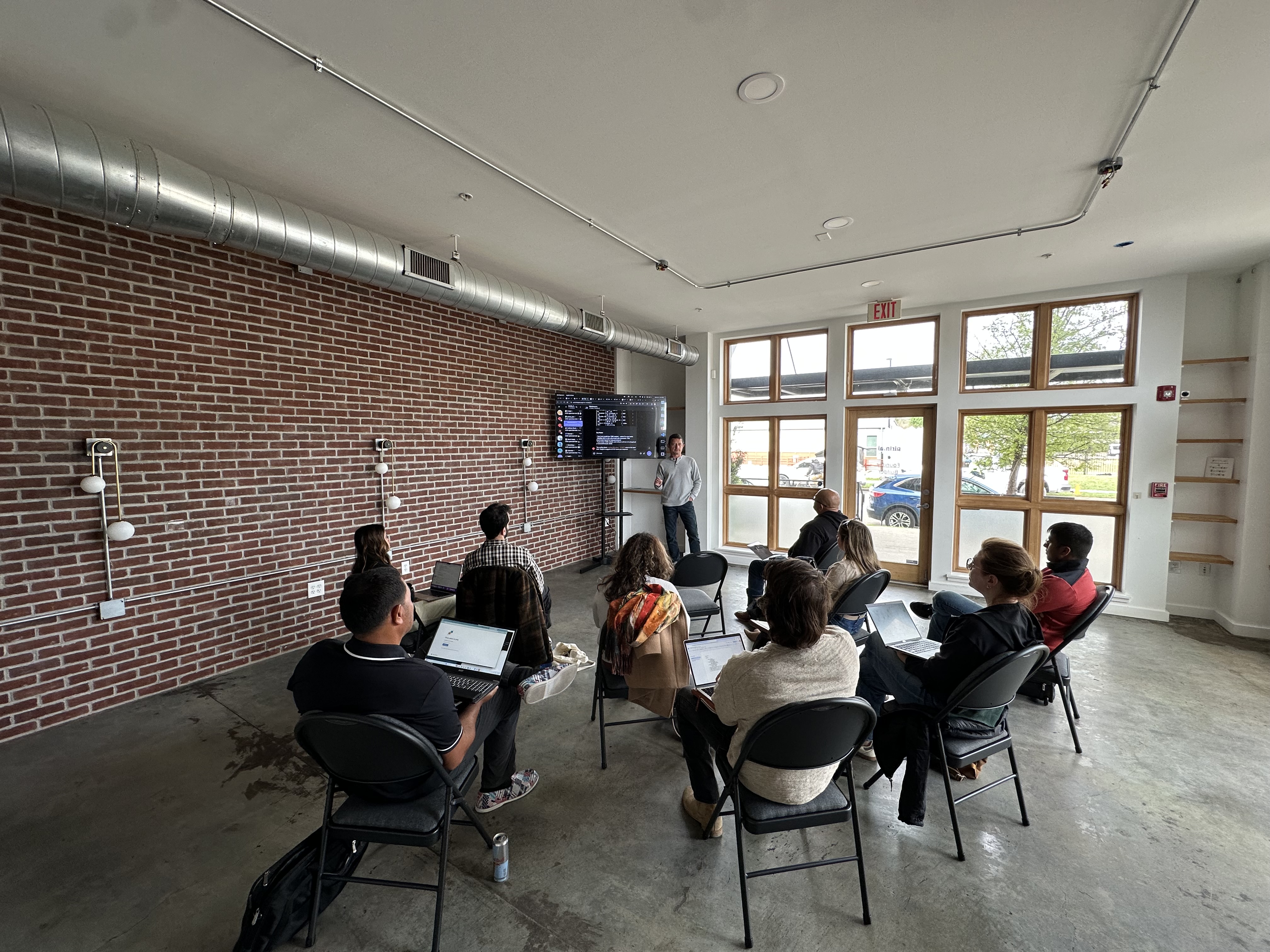
Live demo: attendees followed along on their laptops as we ran agents from the command line and Telegram
Act IV: Live Demos with Audience Prompts
The demo block was the energy peak of the session. We ran OpenClaw live, taking prompts from the room and showing in real time what a locally-configured agent can do:
- Web research and summarization across multiple sources.
- Drafting and sending a structured outreach message via Telegram.
- Running a multi-step workflow triggered by a single natural language instruction.
- Explaining its own reasoning and plan before executing each step.
Watching a local agent carry out a multi-step task in real time lands differently than any slide or description. The room got quiet in that particular way that happens when people realize something has actually changed.
Act V: OpenClaw Install and Getting Started
We walked through the OpenClaw installation flow for the non-technical founders in the room. The short version of what we covered:
- OpenClaw is open source on GitHub and crossed 250K stars earlier this month.
- It can run against cloud APIs (OpenAI, Anthropic) or local models via Ollama—same agent code, different model backend.
- Installation is a single command. Configuration is a
.envfile with your API keys and Telegram token if you want mobile access. - The community is active, the documentation is improving rapidly, and the best way to learn is to run an agent and break something.
The Conversation That Followed
The Q&A and brainstorm that closed the session was genuinely one of the best we have had. Ideas came fast from a diverse room—solo founders, technical builders, operators, and people who had never written a line of code but were clearly ready to direct an AI team:
- Using an agent as a customer intake system that qualifies leads and books calls without human intervention.
- A content research agent that monitors competitor activity and drafts weekly digests.
- An ops agent that manages contractor communications and project status updates via Telegram.
- Personal knowledge base agents that learn from your own notes and surface relevant context on demand.
- Agents for real estate: property research, market comparisons, and automated outreach pipelines.
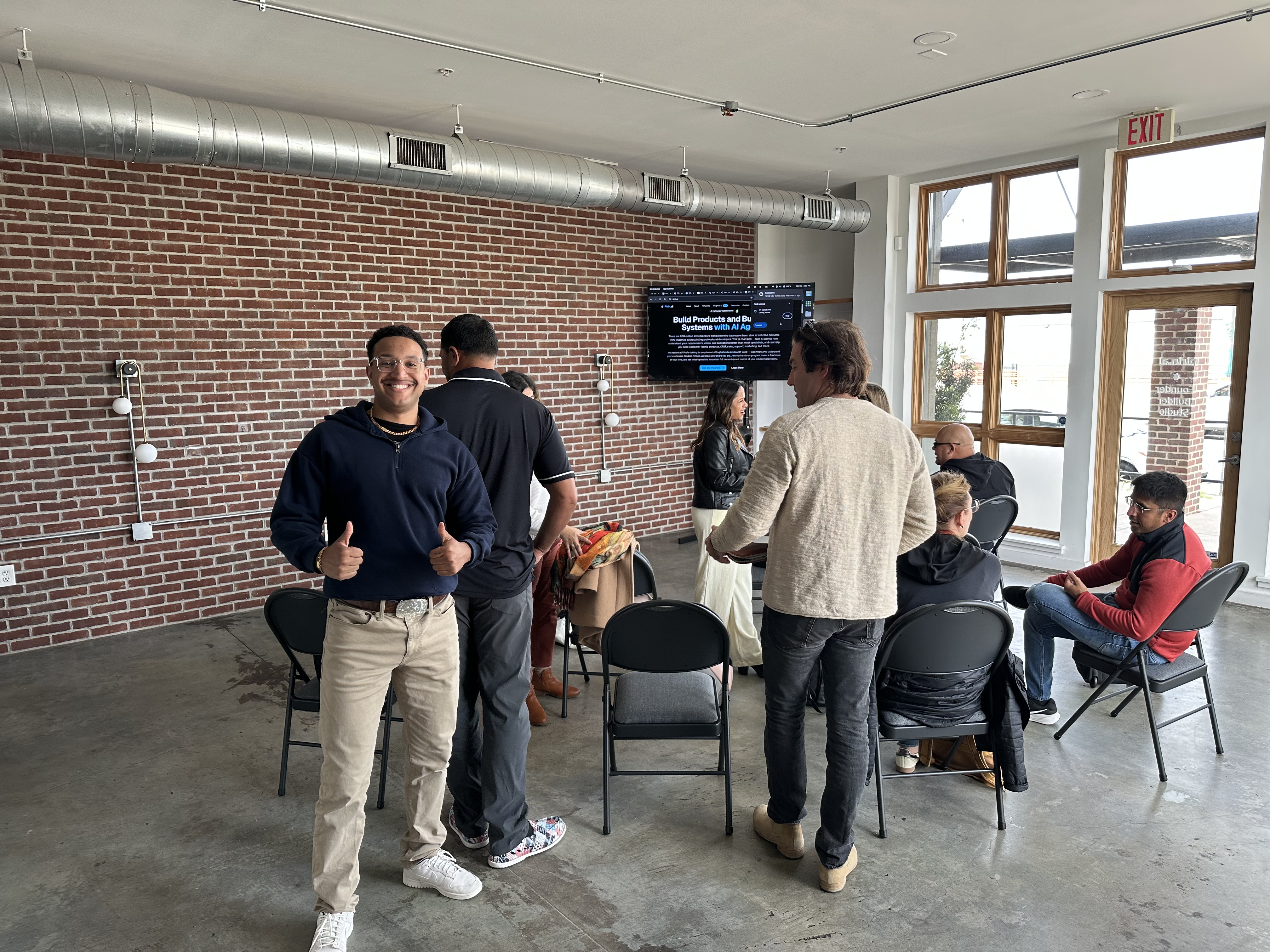
Post-session networking. The energy carried well past the official end time—founders kept exchanging ideas and contact info long after we wrapped. The Pirin.ai site was on the wall screen for anyone who wanted to dig into next steps.
What struck us most was how rapidly non-technical founders are developing real intuition for what agents can and cannot do. The mental model is clicking. The barrier is no longer "I don't understand AI"—it is "I need a structured path to go from idea to running system." That is exactly what we are here for.
Event Details
Building Teams with Agents
SXSW 2026 Side Event
March 16, 2026
Pirin.ai Founder Builder Studio
2235 E 6th St, Austin, TX 78702
Hosted By
Ivelin A. Ivanov — Founder, Pirin.ai
Tags
Ready to Build Your AI Agent Team?
Join the Pirin.ai Ground Level program for hands-on workshops, weekly office hours, and a community of founders who are building real products with AI agents right now.