Who this is for
A real arm in a home, a factory cell, or a hospital. A few hundred private episodes. The files cannot go on the public internet. There is also no budget to collect a private corpus large enough to train alone.
Usually that is a university lab blocked by an IRB or a partner, a small company with customer teleop under NDA, or a hospital group that can train on site and cannot export video.
If the recordings can be published, publish them. If the team can buy collection or already trains on its own cluster, that is the better path.
Why money does not fix this case
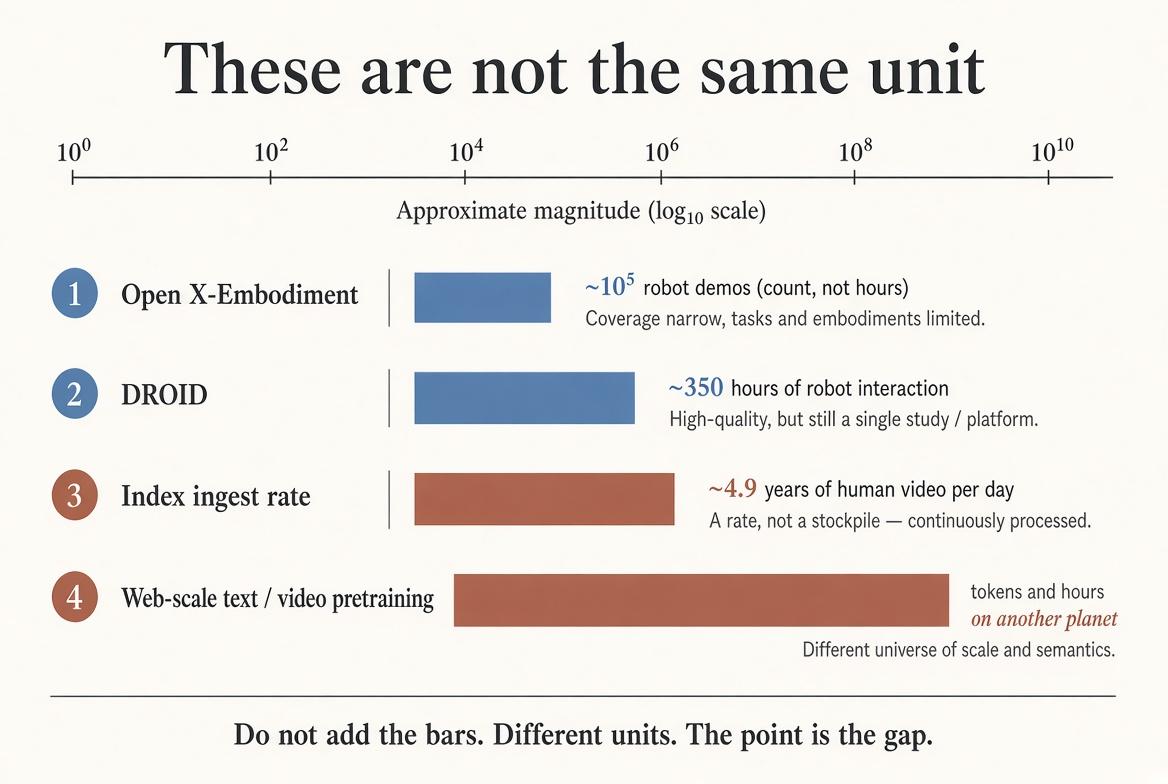
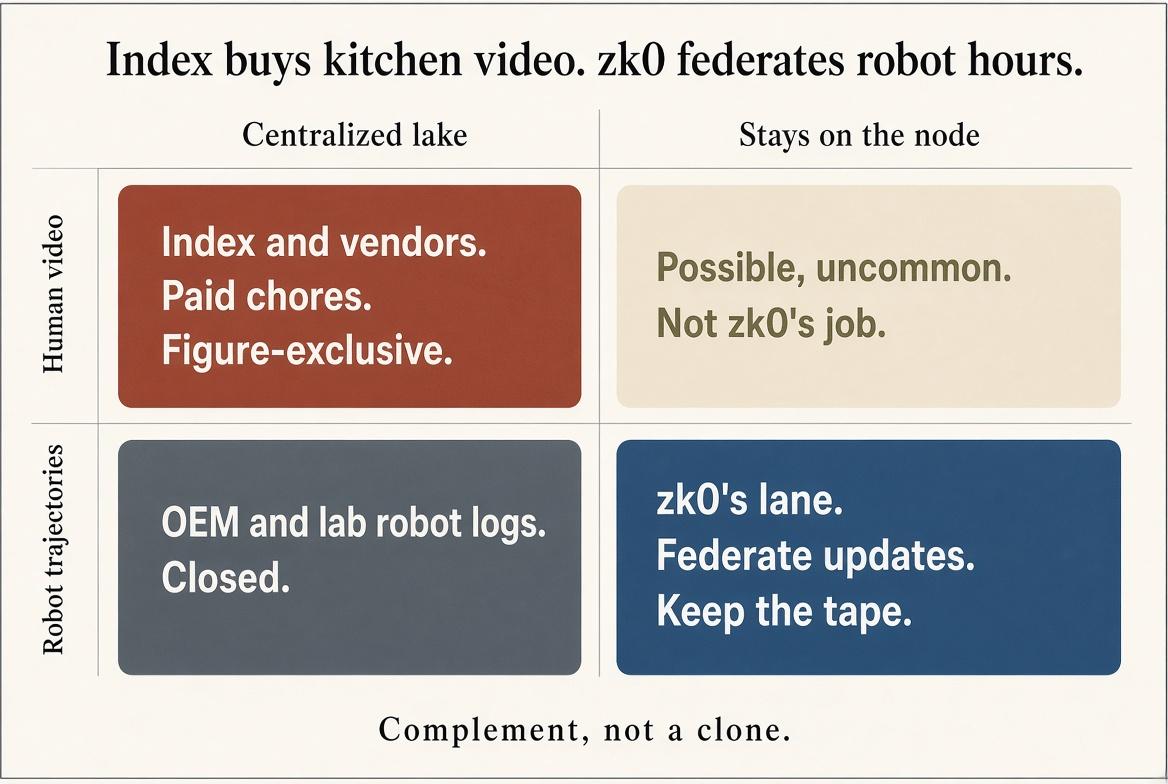
Public robot data is still small. Open X is about 100,000 demonstrations across many bodies. Well-funded teams treated that as a purchasing problem. Figure's Index post cited $15 million and 16 million human videos. NVIDIA reported a generation pipeline that turned about 36 hours of compute into the equivalent of three months of hand collection.
Those options are real. They are not available here. Fine-tuning a public model on eighty local episodes memorizes one room. The missing hours have to come from peer sites without anyone shipping the tape.
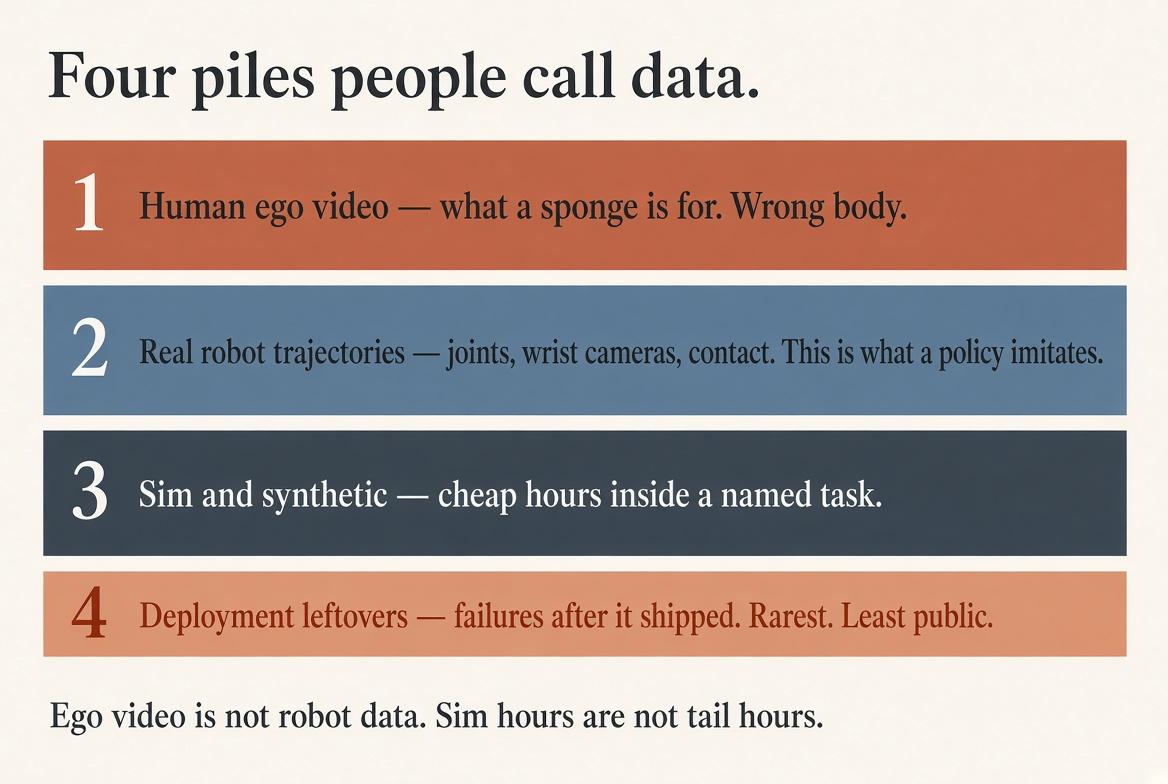
Only one of these piles is the robot's own joints and cameras. That is the pile sitting on the local disk.
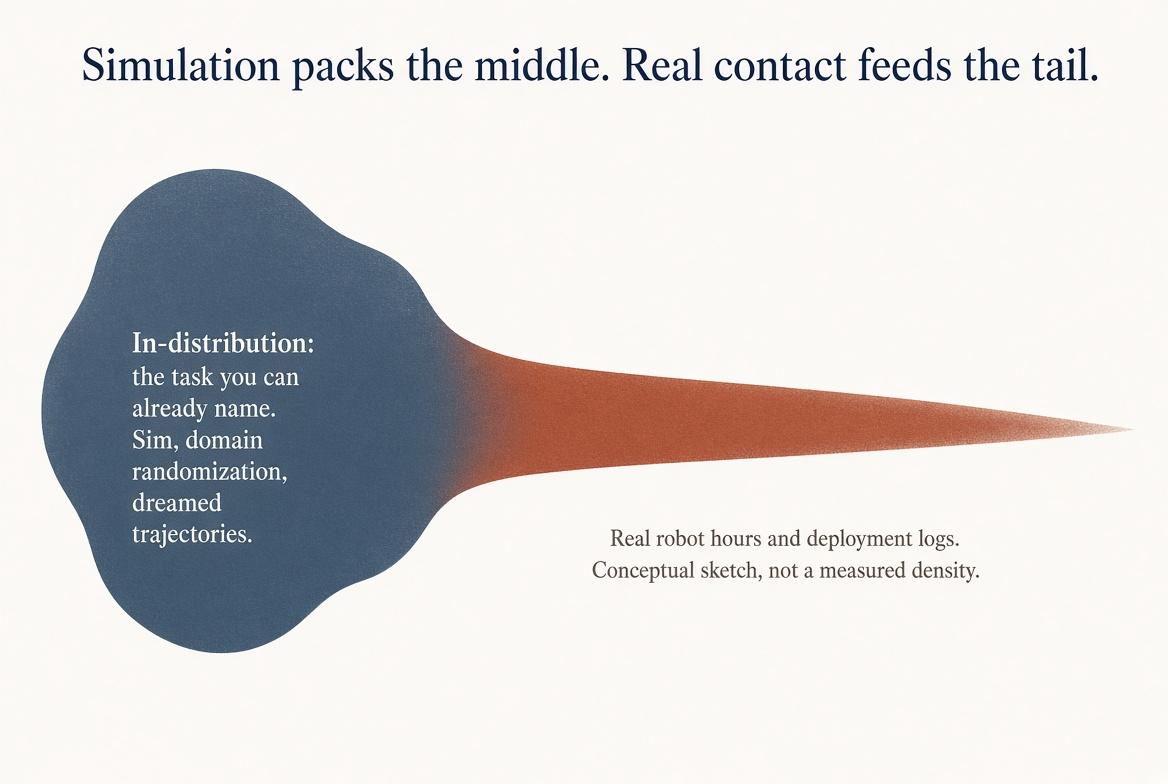
Simulation helps with motions that can already be named. New rooms still come from real contact. Generation helps the teams that can run it.
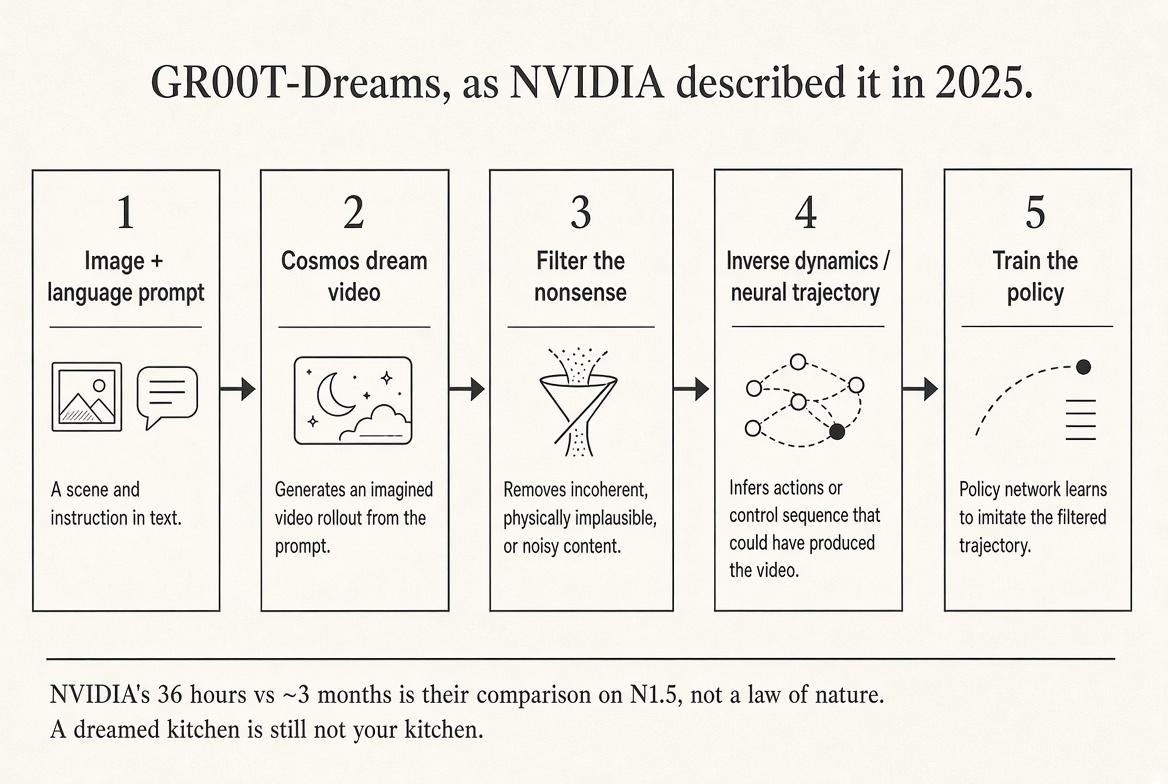
NVIDIA's comparison on GR00T-Dreams: about 36 hours of generation versus an estimate of three months of people collecting. A useful number for that stack. Not a substitute for a room that cannot be exported.
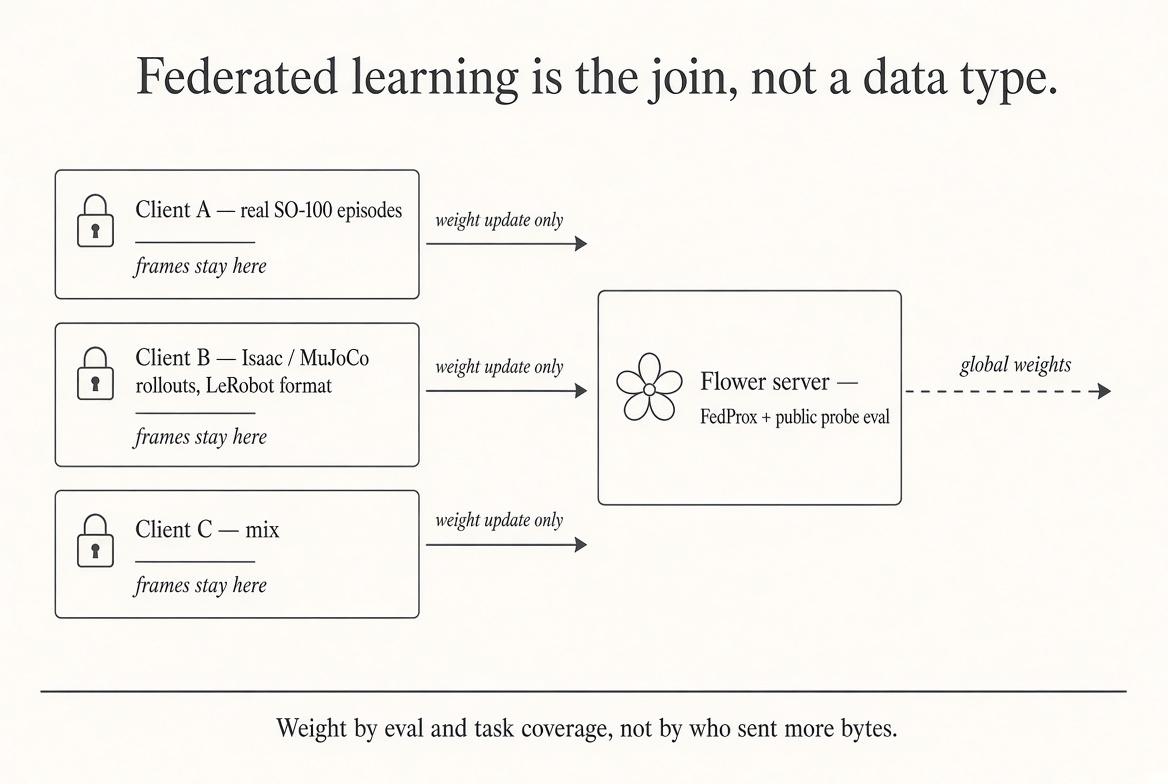
Federated learning is a way to train when the files have to stay put. Each site trains locally. The server receives weight updates, not video.
Closed stacks
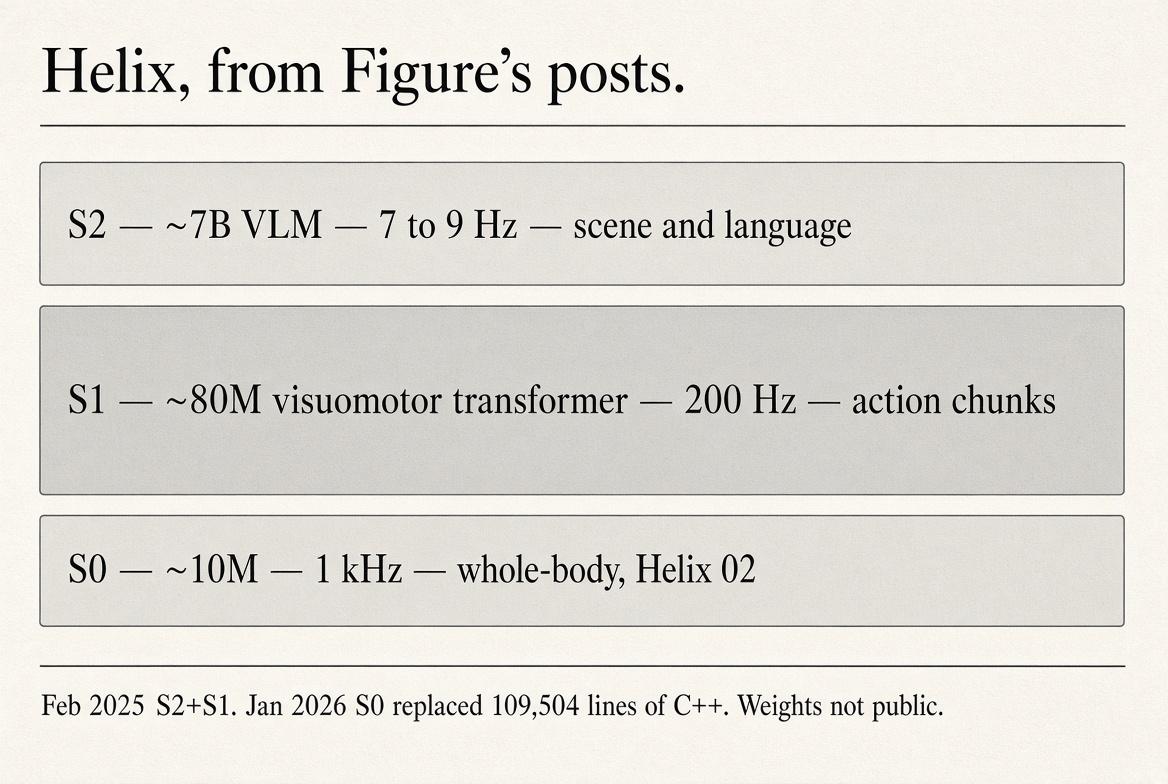
Helix runs on Figure robots. The architecture is public. The weights are not. It cannot be fine-tuned on an independent SO-100.
zk0
An open network for a small vision-language-action model. SmolVLA, about 450 million parameters. Flower SuperNode. FedProx. Updates move over TLS. Episodes stay on the client.
Published 30-round run: average client policy loss from 2.53 to 0.34. December 2025 white paper: client loss down about 89 percent, server score 0.495 on unseen SO-101 tasks. Checkpoint: ivelin/zk0-smolvla-fl. Evidence the loop can converge on real arm data. Not a product score.
Not a marketplace, a humanoid stack, a token, or a public dataset. Not a replacement for a team that already trains in one place.
Next
One independent site trains against a live server on recordings that never leave that site.
- Confirm the files cannot be published and cannot be centralized.
- Keep them in LeRobot format on a machine with file and network access.
- https://zk0.bot/docs/NODE-OPERATORS.html
- ivelin@zk0.bot, subject SuperNode + dataset. Setting, arm, task. No video.
https://zk0.bot · https://github.com/ivelin/zk0 · White paper, Dec 2025
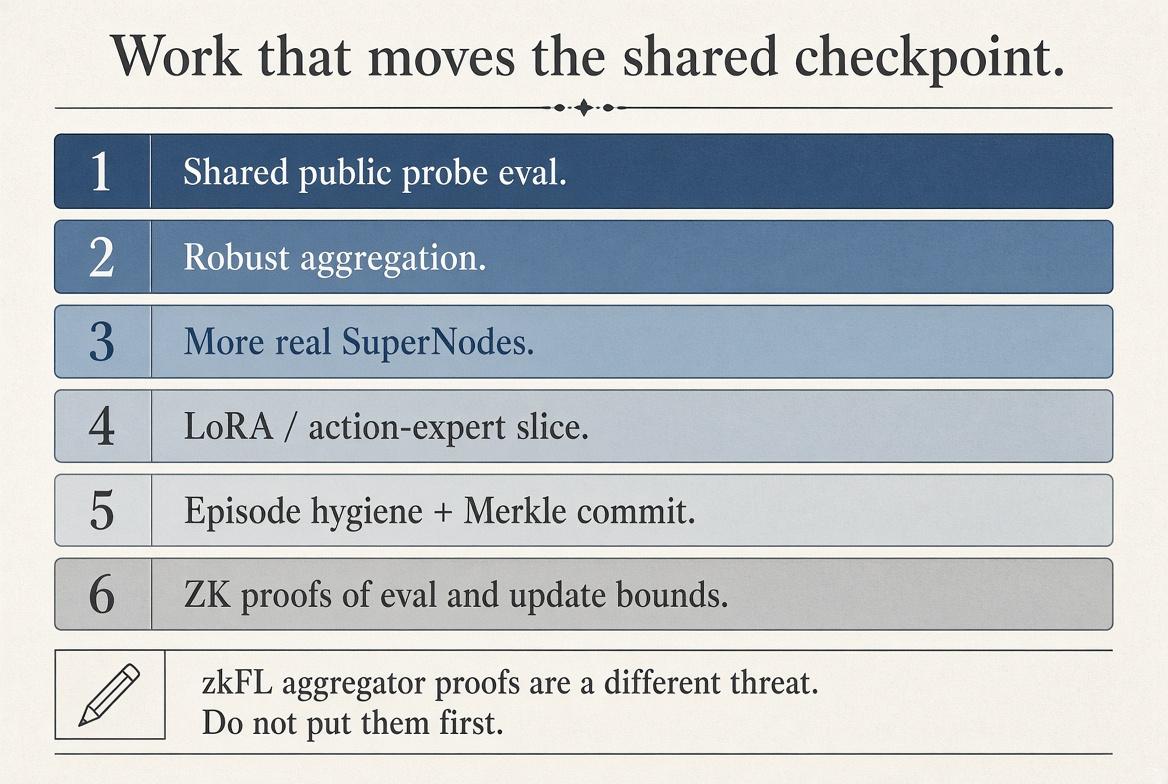
Work that does not move the shared checkpoint can wait.
Sources
Figure, Helix, 20 Feb 2025. Figure, Helix 02, 27 Jan 2026. Figure, Index, 25 Aug 2026 ($15 million and 16 million videos are their figures). NVIDIA, synthetic trajectories / GR00T-Dreams, 16 Jun 2025. Hugging Face, SmolVLA, 3 Jun 2025. Open X-Embodiment and DROID for the public robot-data magnitudes in Figure 1. zk0 white paper, Dec 2025, and checkpoint ivelin/zk0-smolvla-fl.