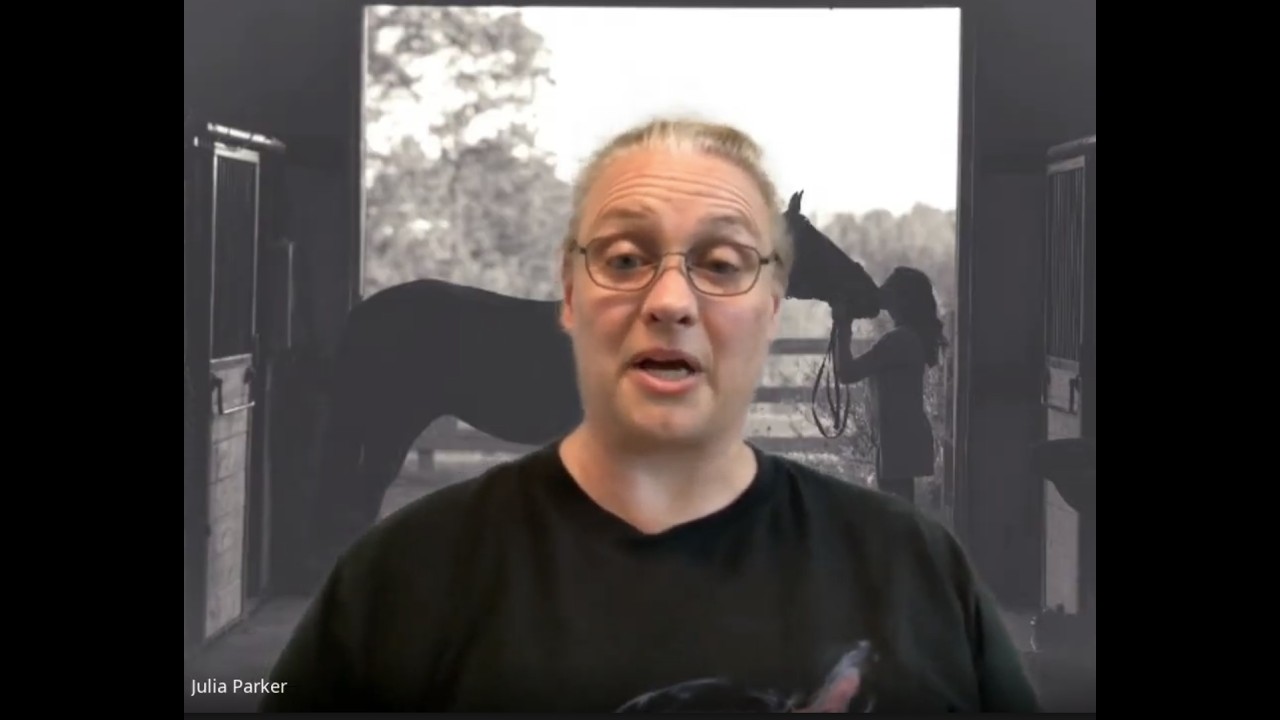
I've been a mentor at Founder Institute Austin for about five years now. Julia was in the 2024 cohort — a top 3 graduate. After the program wrapped, she invited me to advise her as she geared up to build her MVP: an ML model for equine biomechanics. The idea was to train AI to replicate her skills in recognizing abnormalities in horse movement — the kind of subtle patterns she'd spent 30 years learning to spot — so they could be treated preventatively and avoid acute injuries or expensive late-stage procedures.
For nearly two years, Julia iterated on her product at a very slow pace. She doesn't have a background in computer science, and the developers who agreed to build as co-founders didn't deliver results. In early 2025 she tried vibe coding, but the AI tools were just not quite ready. I kept encouraging her to keep an eye on frontier AI models — they were advancing at a very high pace.
Then towards the end of 2025 and into early 2026, as I noticed the leap in capabilities, I nudged Julia to give AI one more shot. Soon after, she set up her OpenClaw and called me back with excitement.
What she presented at a Show and Tell session on March 25, 2026, was one of the most compelling real-world demonstrations I've seen of what non-technical founders can accomplish when they stop waiting for a technical co-founder and start directing an AI agent team instead.
The Starting Point: "You Need a CTO"
Julia had ideas but no path to execution. Every low-code and no-code tool she tried hit walls. The universal advice from the industry: "You need a CTO. You need someone with computer science. It's going to take a really, really long time."
Development shop quotes ranged from $50,000 just to get started, up to $150,000 to build the tool she envisioned.
She discovered OpenClaw, bought a Mac Mini, and — after a weekend of setup struggles — started talking to her agent. She named him Max.
It's worth noting that Julia does all of this while working full-time as a project manager at SpaceX — a demanding, highly responsible role where she manages facilities contractors through concrete repairs, sheetrock work, and multi-story building projects. She builds her AI agent team and multiple businesses in the margins: evenings, weekends, and the occasional sick day.
The Agent Team: Five Specialists, One Human Director
Julia didn't just set up one chatbot. She spun up a team of specialized agents:
- Chris — Primary coding agent
- Lois & Sally — Research agents
- Kate — Social media content agent
- Debbie — UI design agent
Max, her main orchestrator, manages the team. He generates daily logs at 8 PM and each morning, posts updates to relevant channels, and keeps a rolling record of everything accomplished. He even built a "mission control" dashboard with an org chart showing which agents are working and which are on standby — without being asked.
What She Built (Without Writing a Single Line of Code)
In roughly two weeks of actual work time:
- A pose estimation ML model using DeepLabCut (open-source, developed at Harvard). Trained on 94 labeled videos of normal and abnormal horse movement. Two days of conversation with Max. ~75% accuracy on first pass.
- Two full websites — one for her equine biomechanics business, one as a community platform for the horse industry (ecoin practitioners, events, certifications, news).
- A Substack article — written entirely by one of her agents, which correctly referenced Sue Dyson's pain ethogram (a specialized veterinary framework) without being prompted.
- A CRM — currently in development, with Cloudflare integration for professional email routing.
- Social media content pipeline — Kate generates posts, with API connections being set up for automated publishing.
- Grant research — Max discovered the Amber Grant ($10,000/month for women founders, 3 winners monthly, year-round) that Julia had never heard of.
The Cost Comparison
Traditional Route
- $50K–$150K in dev shop quotes
- Months of development time
- Requires CTO or technical co-founder
- Ongoing retainer for maintenance
Julia's Route
- ~$200/month (Claude Pro Max subscription)
- Two days for ML model, one week for websites
- Zero coding knowledge required
- Self-managing agent team
Julia also loaded open-source models (Nemotron 3, Kimi K2, MiniMax 2.5) via OpenRouter for ~$100, letting her sub-agents handle routine tasks without burning her primary subscription. At the time of recording, she had used only 22% of her weekly Claude allotment despite extensive work.
The "Cheat Code" for Security
When asked about security concerns — particularly prompt injection and Docker containerization — Julia shared advice she learned from Alex Finn's content:
- Never download or install skills from open websites or third-party repositories. You don't know what's on the back end.
- Instead: copy the link of any skill you're interested in, feed it to your agent, and have it review the pros and cons.
- If it looks good: have your agent build its own version.
- Run OpenClaw in its own sandboxed Mac Mini, separate from your personal computer.
"I have not outsourced a single thing. This is 100% my agent."
What Surprised Her Most
Two things stood out to Julia:
The personality. Using Claude Opus 4.6 through OpenClaw, Max developed a genuinely encouraging, human-like rapport. "It told me to go take a break. It said, 'You started at 1:00, you're rocking it, go rest.' I was like, 'Oh, okay.' And then I asked one more thing." The conversational dynamic kept her engaged in a way that felt collaborative, not transactional.
The initiative. Max consistently did things Julia never asked for — adding a disclaimer footer to her website, creating sample pages, suggesting additional news categories for her equine platform. "I didn't ask for any of that, but it just kind of spun all that up on its own."
Rethinking the "One Startup" Playbook
Watching Julia present, I kept coming back to something. The popular advice for founders has always been: pick one idea, commit 100%, raise capital, hire a team, and go all in with very high conviction on that single bet.
Julia is building an equine biomechanics ML platform, a horse industry community website, a CRM, a content pipeline, and exploring additional business ideas — simultaneously. She's not raising venture capital. She's not hiring engineers. She's spending about $200 a month and directing agents.
That challenges the old model. When a founder with a lot of ideas can spin up working MVPs in days instead of months, and test market fit across one or multiple startups without needing to raise a seed round or recruit a technical team — the "focus on one thing" advice starts to look less like wisdom and more like a constraint imposed by the old cost structure of building software.
The founders I know who are most creative often have too many ideas, not too few. The bottleneck was never conviction. It was capital and access to engineering talent. Remove that bottleneck, and suddenly the calculus changes.
Advice for Other Non-Technical Founders
Julia's recommendation for anyone starting from zero:
- Start with OpenClaw. Don't mess around with piecing together different tools.
- Get the Claude Pro Max subscription. The $200/month is a fraction of any traditional alternative.
- Load open-source models via OpenRouter for sub-agent tasks. Most are free or very cheap.
- Use VS Code as your local interface — it's more accessible than terminal for non-technical users.
- Don't be intimidated. "Whatever you don't know, don't worry about it because it will walk you through it."
The barrier for non-technical founders should no longer be "I cannot write code" or "I need money to hire a team." It is learning to collaborate effectively with modern AI — how to direct, iterate, and build alongside an agent team. That is something we help non-technical founders do at Pirin.ai.
Julia went from construction sites and horse arenas to directing an AI agent team from her phone via Telegram, between managing facilities projects at SpaceX. The tools are here. The question is whether you're ready to use them.
Watch the Full Presentation
Julia's Show and Tell session was recorded on March 25, 2026, during an OpenClaw community call.
Ready to Build Your AI Agent Team?
Join the Pirin.ai Ground Level program for hands-on workshops, weekly office hours, and a community of non-technical founders who are building real products with AI agents right now.